

 USD
 EUR
 AUD
 GBP
 JPY
 INR
 MXN
 CAD
 JMD
Total: $0.00
Taxes and shipping calculated at checkout


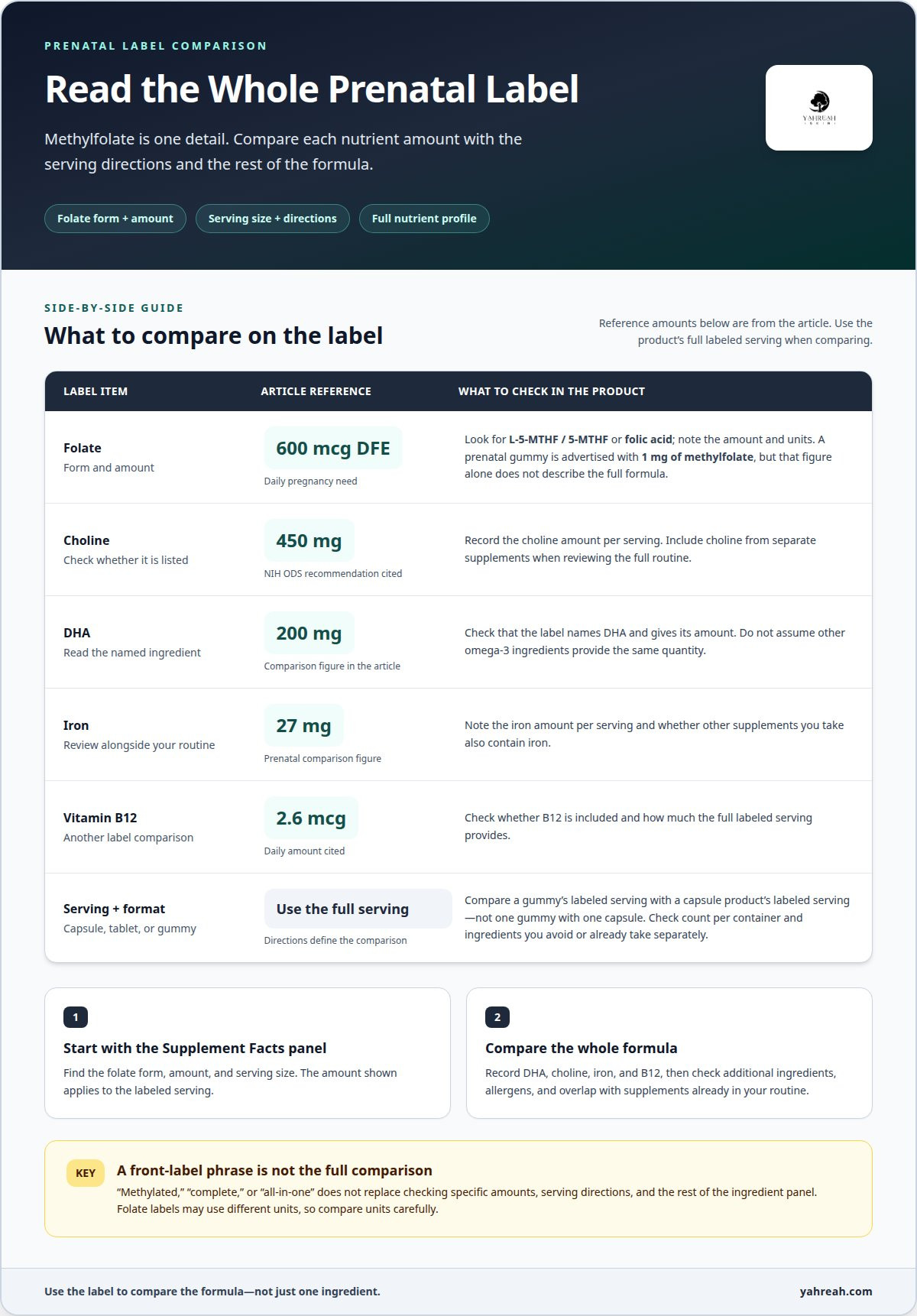
What if “methylated folate” is only one part of the prenatal label that deserves your attention? A prenatal multivitamin with methylated folate provides folate in that form, but its amount and the rest of its nutrient profile matter too. According to the National Institutes of Health Office of Dietary Supplements, daily folate needs during pregnancy are 600 mcg DFE. A product’s label can help you see how its folate compares with that reference point.
It’s understandable to focus on folate type when comparing prenatal formulas. But the fuller picture matters. This guide explains what methylfolate is, how to compare prenatal products, and how to assess DHA, choline, iron, and pregnancy folate needs. You’ll learn how to read supplement labels and consider how each formula fits your routine, without treating one ingredient as the whole story.
Methylfolate is a form of folate used in some prenatal supplements. Labels may list it as L-5-MTHF or 5-MTHF, while others list folic acid. These names describe different forms of vitamin B9, so read the ingredient panel rather than relying on “methylated” on the front. A prenatal multivitamin with methylated folate combines that folate form with other nutrients, and the full formula matters.
Does the MTHFR gene variant affect which prenatal folate to choose? MTHFR variants can affect folate metabolism, but having a variant alone doesn’t determine which formula is right for you. Compare the folate form and amount on the label, then discuss your health history and current supplements with a qualified healthcare professional.
Use a simple label-reading sequence. First, find the folate entry and note whether it lists methylfolate or folic acid. Next, record the amount and serving size, since the listed amount applies to the labeled serving. Then check the other ingredients against nutrients you already take separately. This helps you compare the full formulas instead of relying on a single phrase on the front label.
Vitamin B12 also belongs in the comparison: according to the National Institutes of Health Office of Dietary Supplements, the recommended daily amount is 2.6 mcg. Check whether a prenatal includes B12 and how much it provides. A clear ingredient panel makes that comparison easier.
What do prenatal vitamins with methylated folate cost, and are they covered by insurance or an FSA? Costs vary by formula, serving size, and nutrient amounts. Insurance or FSA eligibility depends on the applicable plan rules and expense criteria, so review those terms before budgeting for a supplement.
Start with the folate amount per labeled serving, not the product name. A prenatal gummy product is advertised with 1 mg of methylfolate, but that figure alone doesn’t describe the whole formula. Compare the serving size and directions alongside the folate amount. A number on the front label may refer to a serving, so the serving information helps put products on equal terms.
Next, compare the rest of each Supplement Facts panel. Note whether the product lists DHA, choline, iron, and vitamin B12, then record their amounts per serving. A formula with methylfolate may differ from another in these nutrients, serving instructions, or additional ingredients. This step turns a quick label scan into a clearer side-by-side comparison.
Consider the format, too. Capsules, tablets, and gummies differ in how they’re taken, and serving directions show what counts as one labeled serving. For example, compare a gummy’s listed serving with a capsule product’s serving, rather than comparing one gummy with one capsule. The count per container can also help you estimate how long it lasts when used as directed.
Next, look beyond the headline nutrients. Check for allergens or ingredients you avoid, and note any overlap with supplements already in your routine. Two products may both feature methylfolate but differ in other ingredients. A simple comparison table can organize the details: folate amount, serving size, format, other nutrients, and ingredients.
Treat claims such as “complete” or “all-in-one” as a reason to inspect the label, not as a substitute for it. The label lists the specific amounts and directions you can compare. Keep suitable options in consideration, and bring an ingredient panel to a healthcare professional if you need help assessing it alongside your existing supplements.
Folate is only one part of a prenatal formula. DHA, choline, and iron are three other nutrient amounts to compare on the Supplement Facts panel. Check each amount per serving and compare the serving directions. This helps you understand what the full daily serving provides, rather than judging a product by one nutrient or a front-label claim.
For choline, the National Institutes of Health Office of Dietary Supplements recommends a prenatal with 450 mg. Check the label for choline specifically, since the panel shows whether a formula supplies it and in what amount. If choline appears in a separate supplement you already take, include that when reviewing your routine. The label is the starting point for an accurate comparison.
DHA is another useful line to inspect. A comparison figure for prenatal vitamins is 200 mg of DHA. Check whether the label names DHA and lists its amount, rather than assuming that a product with other omega-3 ingredients provides the same quantity. If the serving contains more than one capsule or gummy, use the full serving amount when comparing formulas.
Iron also deserves a careful look. A prenatal comparison figure is 27 mg of iron. Read the iron amount alongside the serving directions, and note whether other supplements in your routine also contain iron. The combined picture matters when you’re comparing products or reviewing your current intake with a healthcare professional.
Make the comparison practical by writing down three label values: choline, DHA, and iron. One product might list choline but not DHA, while another lists DHA and iron in different amounts. These differences can help you see which formula’s nutrient profile is closer to your needs. Don’t infer an amount from a product’s name or format; use its Supplement Facts panel and serving size. A side-by-side record also makes it easier to discuss the formula with your healthcare professional.
Folate planning begins before pregnancy because early development starts before many people know they’re pregnant. The neural tube forms within the first 28 days after conception. That timing helps explain why folate is considered before conception, not only after a pregnancy is confirmed.
According to the National Institutes of Health Office of Dietary Supplements, daily folate needs during pregnancy rise to 600 mcg DFE. This reference is expressed as dietary folate equivalents, or DFE. Product labels may also show folate in micrograms, so compare the units carefully instead of treating every number as directly interchangeable.
For timing, the available recommendation is to start folate supplementation 3–6 months before conception and take 400–800 mcg daily. Another suggested range is 400–600 mcg of methylfolate daily before conception and throughout pregnancy. These figures describe recommendations, not a reason to stack multiple products. Review the label’s form and amount as part of the whole routine.
Are prenatal vitamins with methylated folate recommended by the CDC, ACOG, or other U.S. medical organizations? The information here establishes a pregnancy folate reference amount, not a specific CDC or ACOG endorsement of methylfolate. A nutrient target and an endorsement of one folate form are different claims.
What are the risks of taking too much folate or combining prenatal vitamins with supplements? Combining products can duplicate folate and other nutrients, making total intake harder to track. Add the amounts shown on the labels before taking overlapping supplements, and review the combined routine with a healthcare professional.
Use the pregnancy timeline, DFE amount, and supplement labels to guide your comparison. If you’re exploring broader wellness options alongside this research, explore wellness essentials.
Yahreah Skin offers women’s health and premium supplements for readers exploring wellness products alongside prenatal nutrition research. Its range also includes men’s health supplements and natural skincare products, supporting a considered approach to everyday care.
After comparing folate forms, serving directions, and other nutrients, use the label details to guide your next step. If you’re considering a supplement as part of a pregnancy routine, review its ingredients with a qualified healthcare professional, especially when combining products. Yahreah Skin’s wellness products can complement a broader routine, but they don’t replace prenatal guidance or individualized medical advice.
For questions about Yahreah Skin’s offerings, contact Yahreah Skin.
Make your next step a thoughtful conversation, not a rushed decision. Keep the product label and a note of your current supplements nearby, then explain what matters to you: ingredient preferences, serving format, and how the formula fits your routine. This context can make a discussion with your healthcare professional more focused, especially if you’re considering a prenatal multivitamin with methylated folate alongside other supplements.
Personal care grows from informed choices made at a pace that feels right for you. Yahreah Skin offers wellness products for readers exploring their broader routines while keeping pregnancy nutrition decisions grounded in professional guidance.
Contact Yahreah Skin to learn more about its offerings. Take the next step with care and confidence.
Methylfolate is a form of folate used in some prenatal formulas, and its label entry helps you compare products accurately. MTHFR variants can affect folate metabolism, but a variant alone doesn’t determine which supplement suits you. Compare the folate entry and serving directions rather than choosing based on “methylated” on the front of the package. Include your other supplements in the review to spot overlapping ingredients.
Methylated folate refers to a form of folate, while folic acid is another form of vitamin B9. They aren’t interchangeable label terms, so read the ingredient list to see which form a product contains. For example, compare two formulas by noting whether each lists methylfolate or folic acid, then review the amount and serving size. The form alone doesn’t establish that one product is best for everyone.
According to the National Institutes of Health Office of Dietary Supplements, daily folate needs during pregnancy are 600 mcg DFE. The comparison guidance also suggests 400–800 mcg daily before conception, starting 3–6 months beforehand. Labels may show DFE alongside a folate form and amount, so check which units appear. A healthcare professional can help interpret the label alongside your diet and other supplements.
U.S. options include prenatal formulas in formats such as gummies and capsules. Products differ in folate form, serving directions, and the nutrients included, so a format alone doesn’t identify a suitable choice. Compare current Supplement Facts panels rather than relying on product names or broad claims. Availability can change, and the label provides the clearest details about a particular formula’s ingredients and serving.
Popularity alone doesn’t show how formulas compare or which one fits your needs. Put their Supplement Facts panels side by side, noting folate form, amount per serving, serving directions, and other listed nutrients. For instance, a gummy and a capsule may have different serving sizes, making a comparison by one piece misleading. Also note ingredients that duplicate supplements you already take.
Compare the amounts of choline, DHA, and iron on each label, and note whether iodine is listed. The National Institutes of Health Office of Dietary Supplements recommends a prenatal with 450 mg of choline; the comparison figures provided are 200 mg DHA and 27 mg iron. For iodine, use the product label and discuss your overall supplement routine with a healthcare professional.


