

 USD
 EUR
 AUD
 GBP
 JPY
 INR
 MXN
 CAD
 JMD
Total: $0.00
Taxes and shipping calculated at checkout


The best skincare regimen is the one you can follow consistently: begin with a gentle cleanser, a moisturizer suited to your skin, and daily sunscreen. Natural skin products can help make that routine feel simple and intentional, but ingredient labels matter more than broad claims. According to the American Academy of Dermatology, daily sunscreen is recommended for everyone aged 6 months and older.
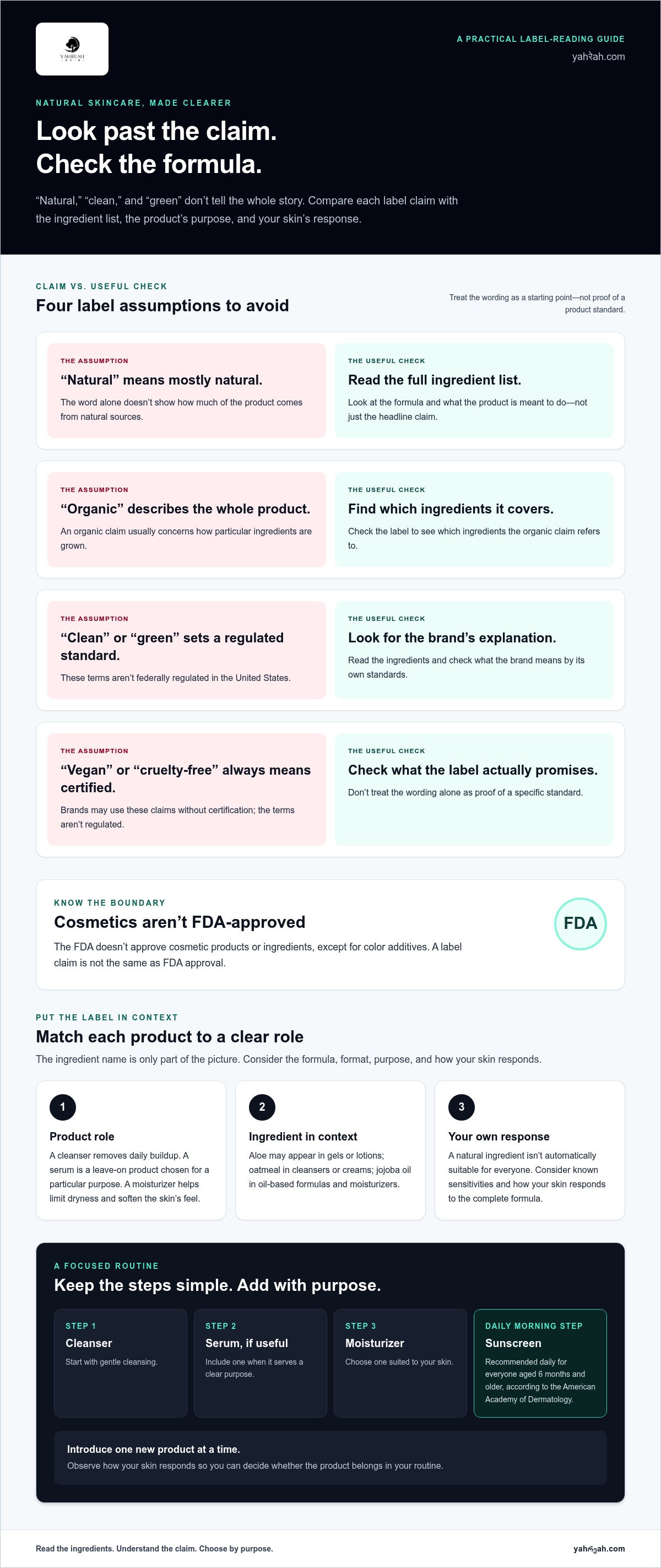
Choosing natural skin products made with familiar botanical ingredients can feel reassuring, but consider how each formula suits your skin instead of relying on the word “natural” alone. Terms such as “clean” and “green” aren’t federally regulated in the United States, so start with the ingredient list.
This guide will help you build a practical routine, understand popular ingredients such as aloe, oatmeal, and jojoba oil, and explore pore-purifying masks alongside natural and organic skincare brands. You’ll also learn what to look for on labels and how to keep your routine focused, so each step has a purpose.
Natural skin care uses products that emphasize ingredients from natural sources, such as plant oils or botanical extracts. To choose thoughtfully, consider the formula, the product’s purpose, and what its label actually promises.
“Natural” can describe a formula’s ingredients, but the word alone doesn’t show how much of the product comes from natural sources. “Organic” usually refers to how particular ingredients are grown, so check which ingredients the claim covers.
In the United States, “clean” isn’t a regulated skincare term, and “green” has no federal regulation. Brands can also use “vegan” or “cruelty-free” claims without certification because those terms aren’t regulated. Read the ingredient list and the brand’s explanation rather than treating these labels as proof of a specific standard. The FDA doesn’t approve cosmetic products or ingredients, except for color additives.
A facial cleanser removes daily buildup, while a serum is a leave-on product chosen for a particular purpose. A moisturizer helps limit dryness and soften the skin’s feel. Compare, for example, a cream cleanser with a lighter gel cleanser, then choose based on how your face feels after rinsing.
Natural facial cleansers may feature plant-derived ingredients, but a botanical label doesn’t tell you whether a formula suits your skin. Read the full ingredient list, introduce one new product at a time, and observe how your skin responds. This makes it easier to decide whether a cleanser, serum, or moisturizer belongs in your routine.
Toners are optional steps used after cleansing, and their purpose depends on the formula. Some add a light layer of hydration, while others focus on removing leftover residue. Compare the ingredients and intended use rather than assuming every toner is necessary or that natural ingredients make formulas interchangeable.
Keep your routine practical: cleanse, use a serum if it serves a clear purpose, and apply moisturizer. Natural cleansers and toners can sit alongside creams and other facial products, but avoid adding several unfamiliar formulas at once. A simple sequence helps you notice how each product feels on your skin.
Natural formulas don’t automatically have a shorter shelf life. Longevity depends on the formula, packaging, and storage conditions, so follow the expiration date and any after-opening guidance on the package.
Daily sunscreen is recommended for everyone aged 6 months and older, according to the American Academy of Dermatology. Make it a regular part of your morning routine, alongside a moisturizer if your skin needs one. Choose products by their function and clear labeling, not by a “natural” or “clean” claim alone.
A botanical ingredient can make a formula appealing, but its name alone doesn’t explain how it will feel on your skin. Aloe, oatmeal, and jojoba oil are familiar examples; consider their role in the full formula, the product’s purpose, and your own skin’s responses.
Aloe may appear in gels or lotions, while oatmeal can be included in cleansers and creams. Jojoba oil is used in oil-based formulas and moisturizers. The product format matters because an ingredient’s role depends on how it is prepared and combined with other ingredients.
Natural and organic describe different things. A natural ingredient may come from a plant or another natural source, while an organic claim concerns how an ingredient was produced. Read the label to see which ingredients the claim refers to, rather than assuming the entire product is organic.
Naturally derived ingredients aren’t automatically more suitable than synthetic ones. A synthetic ingredient may serve a practical purpose, such as helping a serum spread evenly or keeping a formula consistent. Judge a product by its complete ingredient list and intended use, not by whether an ingredient sounds natural.
Research ingredients in context. Look up each name on the package, note its role in the formula, and consider whether it matches your skincare preferences. If you know that fragrance or a particular oil bothers your skin, use that experience to guide your choices. Add one new product at a time instead of changing your cleanser, serum, and moisturizer together.
Are natural skincare products safe during pregnancy? A natural label alone can’t establish whether a product is suitable during pregnancy; the ingredients and their intended use matter. Review the full ingredient list before choosing a new facial product instead of relying on “natural” or “organic” wording.
When considering ingredients to avoid, start with known sensitivities and formulas that have caused an unwanted reaction before. For example, if a scented cream has bothered your skin, choose an alternative without that fragrance. “Natural” doesn’t mean an ingredient will suit everyone, so read makeup and skincare labels in full.
Keep a simple record as you explore natural skincare: note the product, its key ingredients, and how your skin looks and feels after use. This gives you a practical way to compare aloe-based gels, oatmeal cleansers, and jojoba oil moisturizers without relying on broad claims about beauty or appearance.
For a considered routine, browse natural skincare choices and compare their ingredients with the needs you’ve identified.
Start with your skin’s needs, then choose products that fill clear roles. A simple routine might include a cleanser, moisturizer, and sunscreen; add a serum only when it serves a specific purpose. This keeps your shelf focused and makes it easier to notice which products suit your preferences.
Personalize your routine by considering how your skin feels after cleansing, whether your moisturizer is comfortable, and what you want from each step. If a rich cream feels heavy, for example, compare it with a lighter lotion. Introduce new skincare products one at a time to identify which formulas you enjoy using.
Affordable natural skincare doesn’t require buying a complete set at once. Prioritize products you’ll use regularly, such as a cleanser and moisturizer, then decide whether a toner or serum adds a useful step. Before purchasing, compare a product’s ingredients, purpose, and package size rather than choosing based on a discount alone.
Skincare prices and sizes vary by formula and packaging. Compare the amount in each container as well as the product’s role in your routine. A larger package may offer more product, but it only makes sense if you’ll use it comfortably before its labeled expiration or use-after-opening guidance.
When comparing discounts, read the offer terms rather than relying on the headline. Check which skincare products qualify, whether the offer applies to a single item or a set, and whether the package includes products you need. A reduced price doesn’t make an unnecessary toner or duplicate moisturizer a better fit.
NATRUE certification can help shoppers identify products assessed against that organization’s natural and organic cosmetics standards. Look for the NATRUE mark on the package, then read the full ingredient list to understand the formula. Certification can inform your choice, but it doesn’t replace deciding whether the product suits your routine.
Read cruelty-related claims just as carefully. A cruelty-free label may express a brand’s position, but the wording alone doesn’t tell you which practices or standards it covers. Look for a clear explanation of the claim and any named certification, then consider whether that evidence meets your purchasing priorities.
To choose intentionally, write down the role each product should play, such as cleansing, moisturizing, or adding a targeted serum. Compare ingredients, size, label claims, and discount terms against that list. This helps you build a personal routine without letting promotions or attractive packaging decide for you.
Choosing a natural or organic skincare brand takes more than scanning its front label. Compare the ingredient list, the brand’s explanations, and the product’s role in your routine. A botanical cleanser and a rich face cream have different purposes, even when both feature nature-inspired packaging.
Start with transparency. A useful brand page names ingredients clearly and explains their role in the formula. For example, if a moisturizer highlights jojoba oil, look for it in the ingredient list. Clear information makes it easier to compare formulas, understand what you’re applying, and decide whether a product fits your preferences.
Certification offers another point of comparison. NATRUE is a named natural and organic cosmetics certification; look for its mark on packaging or brand materials. Treat certification as one selection tool, not a substitute for reading the product label. Consider whether the certified product type and ingredients suit the cleanser, serum, or moisturizer you need.
Brand language also deserves careful reading. In the United States, “green” has no federal regulation, and “clean” isn’t a regulated skincare term. Brands may describe products as vegan or cruelty-free without certification because those terms aren’t regulated. Look for the brand’s explanation of each claim, and distinguish its own policy from independent certification.
Organic claims should make clear what they describe. A package might highlight one organic plant ingredient without claiming the whole cosmetic product is organic. Check the wording and ingredient list together. A cream featuring an organic botanical, for instance, should be considered as a complete formula, not only by its highlighted ingredient.
Consider animal-related values separately from formula composition. A vegan claim concerns animal-derived ingredients, while cruelty-free language concerns animal testing claims. Since brands can use these terms without certification, look for a specific explanation of what they mean. Assess a mineral ingredient, plant extract, or animal-derived ingredient by its role and your purchasing priorities.
Packaging and product information can also help you compare brands. Check whether the label names the product’s intended use, lists ingredients, and provides practical directions. A sunscreen, for example, serves a different role in a routine from a cleansing balm. Choose brands that make these distinctions easy to understand rather than relying on broad promises about beauty or purity.
For a focused comparison, shortlist brands by product purpose, ingredient transparency, and the standards that matter to you. Then compare a cleanser or moisturizer from each brand instead of judging entire ranges by a single product. Clear criteria make natural and organic skincare easier to assess on its own merits, beyond attractive claims.
Natural and conventional skincare products can both serve useful roles. Their labels don’t determine effectiveness by themselves. The formula, intended purpose, and feel in your routine matter more. For example, compare two moisturizers by how comfortably they hydrate your skin, not simply by whether one features botanical ingredients.
Start with the task. A cleanser should remove makeup and daily residue; a moisturizer should leave skin feeling comfortable. A serum should have a clear purpose in your routine. Compare products designed for the same role, such as a natural gel cleanser and a conventional gel cleanser, instead of unrelated formulas.
Ingredient names can help explain a product’s design, but they don’t establish how it will perform for you. Aloe, oatmeal, and jojoba oil appear in different types of formulas. Check where an ingredient appears in the list, what else the formula contains, and whether the product suits your preferences.
Conventional formulas can also include plant-derived ingredients, while natural skincare products can contain processed ingredients. The natural-versus-conventional distinction isn’t a simple measure of quality. A cream’s texture and how easily it fits your routine, for instance, depend on its complete formula, not just an ingredient’s origin.
Use a practical comparison: choose two products with the same purpose, read both ingredient lists, and note the feel, scent, and directions. Add one new product at a time. If you change a cleanser, serum, and moisturizer together, you won’t know which change affected your routine’s comfort or appearance.
Assess claims separately. “Natural” doesn’t guarantee a particular result, and “conventional” doesn’t mean a formula is automatically unsuitable. Look for clear product information, intended use, and ingredient details. If cruelty-free or organic standards matter to you, evaluate those claims separately from performance.
Consistency also affects how useful a product feels in daily care. A moisturizer you enjoy applying is easier to keep in your routine than one with an unwelcome texture. Consider practical details, such as whether the cleanser rinses comfortably and the serum layers well beneath your moisturizer.
Choose by purpose, formula, and personal fit rather than label alone. Compare natural and conventional options within the same product category, then keep the one that works comfortably in your routine. Explore natural skincare options as you consider formulas for your daily care.
Yahreah Skin offers natural skincare products for people who want ingredient-conscious choices in their daily routine. Its range also includes women’s health supplements, men’s health supplements, and premium supplements, bringing personal care together with a broader interest in wellness.
Choose skincare based on its ingredients, purpose, and fit with your routine. Yahreah Skin emphasizes clean ingredients, cruelty-free formulations, and products made in the USA in an FDA-registered facility. These details explain the brand’s approach as you compare options and decide what aligns with your care priorities.
If you’re ready to explore, visit Yahreah Skin online.
Your skincare routine doesn’t need to become a pursuit of perfection. Let it evolve with your needs, and choose each step with care. The most useful natural skin products are those that fit comfortably into everyday life and reflect the ingredients and values you prioritize.
That thoughtful approach can extend beyond your bathroom shelf. Alongside skincare, Yahreah Skin offers women’s health supplements, men’s health supplements, and premium supplements for those with a broader interest in personal care and wellness. Explore the range and choose what matters to you.
For a closer look at Yahreah Skin’s offerings, contact Yahreah Skin. Your next step can be simple: make space for care that feels intentional, and let your routine grow from there.
They’re skincare formulas that highlight ingredients from natural sources, such as plants or minerals. The label alone doesn’t describe a formula’s composition or performance. For natural skin products, compare the ingredient list with the stated purpose. A botanical face oil, for example, differs from a cleanser, even if both highlight plant-derived ingredients. Focus on what the product contains and how it fits your routine.
No ingredient is best for everyone, so match the formula to your skin’s preferences. If your skin feels dry after cleansing, you might prefer a richer moisturizer; if heavy textures feel uncomfortable, try a lighter lotion. Aloe, oatmeal, and jojoba oil appear in different formulas, but their presence doesn’t guarantee a particular result. Review the full ingredient list and introduce one new formula at a time.
Read the ingredient list and look for precise wording about which ingredients are natural or organic. A certification mark, such as NATRUE, offers a defined standard to consider, but check that it applies to the product you’re choosing. Treat words like “clean” or “green” as brand claims, not proof of a shared standard. Compare the package details with the brand’s explanation before deciding.
There isn’t one price for natural skincare; costs vary by product type, formula, package size, and brand. A cleanser and a concentrated serum may differ in price because they serve different roles and use different formulations. To compare value, consider container size and intended use alongside the listed price. A discount matters only if the product suits your routine and you’ll use it.
“Highly rated” depends on current customer feedback, so compare recent reviews and review counts rather than relying on a single score. Yahreah Skin offers natural skincare products, but judge ratings using current review information, not assumptions based on brand claims. Check whether reviews discuss details relevant to you, such as texture, scent, packaging, or how the product fits into a routine.
Yes. Natural origin doesn’t rule out irritation or an allergic response; fragrance, botanical extracts, and essential oils are ingredients to consider. Before using a new face product, read its full ingredient list and try a small amount on a limited area of skin. Avoid applying it to irritated skin, and stop using it if discomfort develops. Previous reactions can help guide your choices.
Keep each routine focused. In the morning, cleanse if needed, apply a serum with a clear purpose, moisturize, and finish with sunscreen. At night, remove makeup, cleanse, apply an optional serum, then moisturize. Choose a formula for each step based on its role instead of adding products simply to lengthen the routine. If you’re changing products, introduce them one at a time.


