
 USD
 EUR
 AUD
 GBP
 JPY
 INR
 MXN
 CAD
 JMD
Total: $0.00
Taxes and shipping calculated at checkout


A gentle exfoliating face scrub with fruit enzymes uses ingredients such as pumpkin, pineapple, and papaya to exfoliate the skin’s surface, while hydrating ingredients support the formula’s feel. Papaya contributes papain, a fruit enzyme listed among the scrub’s ingredients. Together, these elements bring exfoliation and hydration into one formula.
Exfoliation does not have to feel harsh or abrasive. Both a formula’s ingredients and how you use it shape the experience. Here, learn how pumpkin, pineapple, and papaya enzymes contribute, and how hydrating ingredients complement them. Understanding how the scrub’s exfoliating elements work together can help you choose a routine that feels considered and gentle.
Pumpkin, pineapple, and papaya bring fruit-derived enzymes to exfoliation. Unlike a traditional scrub, which relies on particles and movement to loosen surface buildup, acid exfoliants use ingredients that act chemically on the skin’s surface. A gentle exfoliating face scrub with fruit enzymes may combine approaches: enzymes and scrub particles work together, while the formula’s texture affects the friction created during massage.
That distinction matters during use. A product described in the directions has biodegradable scrub particles and starch spheres measuring 180 microns. Its instructions say circular massage activates the exfoliating enzymes and particles. The spheres’ measured size describes the particles, not how forcefully to rub. Use light pressure rather than treating a smaller particle as a reason to scrub harder.
To apply a fruit enzyme face scrub, follow the product directions: use a quarter-size amount on dry skin, then massage in circular motions. Avoid the eye area and rinse with warm water. Don’t massage longer or use more product than directed. A measured amount and gentle touch keep the steps simple.
What should you avoid combining with fruit enzyme exfoliants? Avoid using another exfoliating scrub or acid product in the same routine, since that adds more exfoliating steps. Keep the routine simple, using a gentle cleanser and moisturizer around the scrub instead of adding multiple active treatments.
What are the risks or side effects of fruit enzyme face scrubs? Skin may react with irritation, redness, dryness, or stinging, especially if you massage vigorously or use several exfoliants in one routine. Stop using the scrub if discomfort develops, and rinse it away with warm water. Avoid the eye area, as the directions specify.
If you’re choosing between a particle scrub and an enzyme formula, compare the directions and texture. A fruit-enzyme product with particles still involves physical contact, so it isn’t interchangeable with an acid exfoliant. Pumpkin, pineapple, and papaya identify the fruit ingredients; the ingredient list and directions show how they fit into the formula.
Fruit enzymes offer an approach to exfoliation that doesn’t rely only on vigorous rubbing. Understanding their role and following a measured routine helps make each use intentional.
Fruit enzymes help loosen surface buildup, supporting the removal of dull, dead skin cells during cleansing. In a formula with scrub particles, they work alongside the physical action of massage rather than replacing it. Check the ingredient list and directions to see which exfoliating components the formula combines. Papain, for example, is a fruit enzyme listed among the scrub’s ingredients.
Texture and technique matter, too. Scrub particles make contact with the skin, while enzymes contribute a different exfoliating action. Follow the product’s directions rather than assuming every enzyme formula works the same way. For example, a formula designed for dry-skin application has a specific first step; applying it to wet skin changes that step.
Use a fruit enzyme face scrub as often as its directions specify, and let your skin’s response guide your routine. Don’t add extra sessions simply because the formula feels gentle. If you already use another exfoliating product, keep the steps separate instead of layering them together.
Choose a consistent place for the scrub in your routine, then notice how your skin feels afterward. Dryness, redness, or stinging are cues to pause exfoliation rather than increase it. Avoid using the scrub on irritated skin, and resume only when your skin feels comfortable. This keeps your routine responsive, not automatic.
Before each use, read the instructions and follow them. Keep the rest of your routine simple: cleanse, apply the scrub as directed, rinse, then moisturize. Avoid adding another exfoliating step at the same time. This sequence makes it easier to identify which product may be affecting your skin if irritation appears.
Consistency doesn’t mean frequent use. A thoughtful routine respects the formula’s directions and your skin’s condition, rather than following a schedule copied from another product. Notice how your skin responds after each application, and allow more time between uses if discomfort develops. This measured rhythm gives fruit-enzyme exfoliation a clear place in your skincare routine.
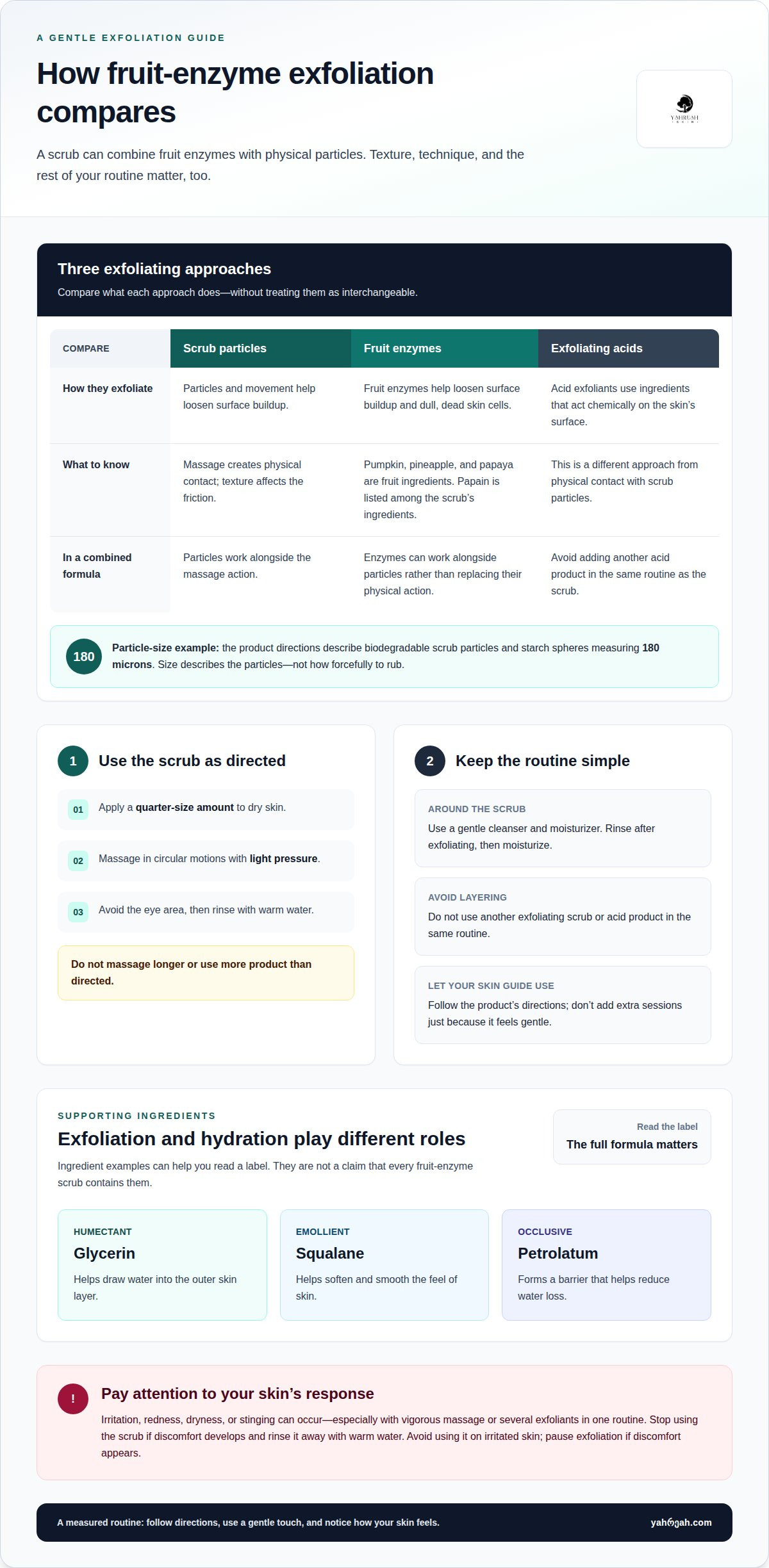
Exfoliation and hydration serve different roles in a face scrub. Enzymes and scrub particles contribute to exfoliation, while hydrating ingredients can support the formula’s feel. Check the ingredient list rather than assuming every fruit-enzyme scrub contains the same supporting ingredients. Glycerin, for example, is a humectant commonly used in skincare to attract water, while emollients such as squalane help soften the skin’s feel.
Ingredient categories offer a practical way to read a label. Humectants, including glycerin, help draw water into the outer skin layer. Emollients, such as squalane, soften and smooth the feel of skin. Occlusive ingredients, such as petrolatum, form a barrier that helps reduce water loss. These are examples of ingredient types, not claims that every fruit-enzyme scrub contains them.
Consider the complete formula and how it fits into your routine. If a scrub leaves your face feeling tight, apply a moisturizer suited to your skin after rinsing. For example, moisturize after cleansing and exfoliating rather than adding several new products at once. This sequence makes it easier to notice how your skin responds to each step.
“Nourishing” can describe a formula’s overall feel, but the word alone doesn’t identify its ingredients. Read the product label for named components, then consider their roles alongside the exfoliating ingredients. A scrub containing glycerin, for instance, has a different supporting ingredient profile from one listing squalane. The ingredient list, not the example, tells you what a specific product contains.
Keep your routine balanced: use a cleanser that doesn’t leave your skin feeling stripped, follow the scrub’s directions, then apply moisturizer. If you already use a separate hydrating serum, introduce changes one at a time. For example, avoid starting a new serum and a new scrub on the same day. This measured approach helps you notice which steps feel comfortable and which formula may need a closer look.
Pumpkin, pineapple, and papaya are three fruit sources associated with enzyme exfoliation. Their presence can indicate a formula designed to include fruit-derived exfoliating ingredients, but the fruit names alone don’t explain each ingredient’s exact role. Read the ingredient list alongside the directions to see what the formula contains and how it is meant to be used.
Papain is the specific enzyme identified in the scrub’s ingredient list. Its presence gives a concrete example of an enzyme ingredient, rather than simply a fruit extract. Pumpkin and pineapple are part of the formula’s fruit-enzyme description, but their names alone don’t establish which individual enzyme compounds are present. Ingredient names matter: an extract and an enzyme are not interchangeable terms.
For a practical comparison, look for named components such as papain on the label, then note how the directions describe the scrub’s use. A formula may combine enzyme exfoliation with biodegradable scrub particles, so fruit ingredients alone don’t explain the overall experience. Texture, application instructions, and other listed components all help describe the finished formula. Don’t infer a stronger or gentler effect from the fruit names alone.
Think of pumpkin, pineapple, and papaya as clues to the formula’s design, not a ranking of ingredient strength. The ingredient list provides details about named components, while directions explain how to apply and rinse the product. For example, papain confirms that a fruit enzyme is identified; it doesn’t reveal the amount or establish how the complete formula will feel on every person’s skin.
Assess a fruit-enzyme scrub thoughtfully with three steps: identify named enzymes, review the full ingredient list, and follow the product directions. This separates a clear ingredient fact, such as papain being listed, from assumptions based only on pumpkin or pineapple. It also keeps your attention on the complete formula, rather than treating any fruit name as a guarantee of a particular result.
Yahreah Skin offers natural skincare products for readers building a thoughtful routine around fruit-enzyme exfoliation. After comparing pumpkin, pineapple, and papaya enzymes, explore skincare options that complement your interest in ingredient-conscious care. The brand also offers Women’s Health Supplements, Men’s Health Supplements, and Premium Supplements for those considering wellness products beyond skincare.
Choose according to your needs: natural skincare products for your skincare routine, or supplements for a separate wellness interest. Let the scrub’s ingredient list and directions guide your routine, and treat supplements as a distinct product category, not a substitute for topical skincare.
For a closer look at Yahreah Skin’s offerings, visit yahreah.com.
Let your next skincare choice begin with the label, not the promise on the front. A gentle exfoliating face scrub with fruit enzymes should suit a routine you can follow thoughtfully, with directions and ingredients that make sense for your skin. Consider what you want from the formula and how it will fit alongside your current products.
Small, considered choices can make skincare feel less like a task and more like a mindful ritual. Keep your routine simple as you explore, and give yourself time to notice how each product feels.
If you’d like to explore Yahreah Skin’s skincare options, contact Yahreah Skin about fruit-enzyme skincare. Choose your next step with care and confidence.
Facial exfoliants may feature pumpkin, pineapple, or papaya ingredients; papain is a fruit enzyme specifically listed in this scrub’s ingredients. Enzymes help exfoliate the skin’s surface by loosening dead skin cells. Fruit names alone don’t identify every active ingredient, so read the ingredient list to distinguish a named enzyme, such as papain, from fruit extracts or other formula components.
Fruit enzymes exfoliate through enzyme activity, physical scrubs rely on particles and rubbing, and AHA or BHA products use acids for exfoliation. Some formulas combine methods: a scrub can pair fruit enzymes with particles, so massage still matters. Compare the ingredient list and directions to see whether a product relies on enzymes alone or combines them with physical exfoliation.


