

 USD
 EUR
 AUD
 GBP
 JPY
 INR
 MXN
 CAD
 JMD
Total: $0.00
Taxes and shipping calculated at checkout


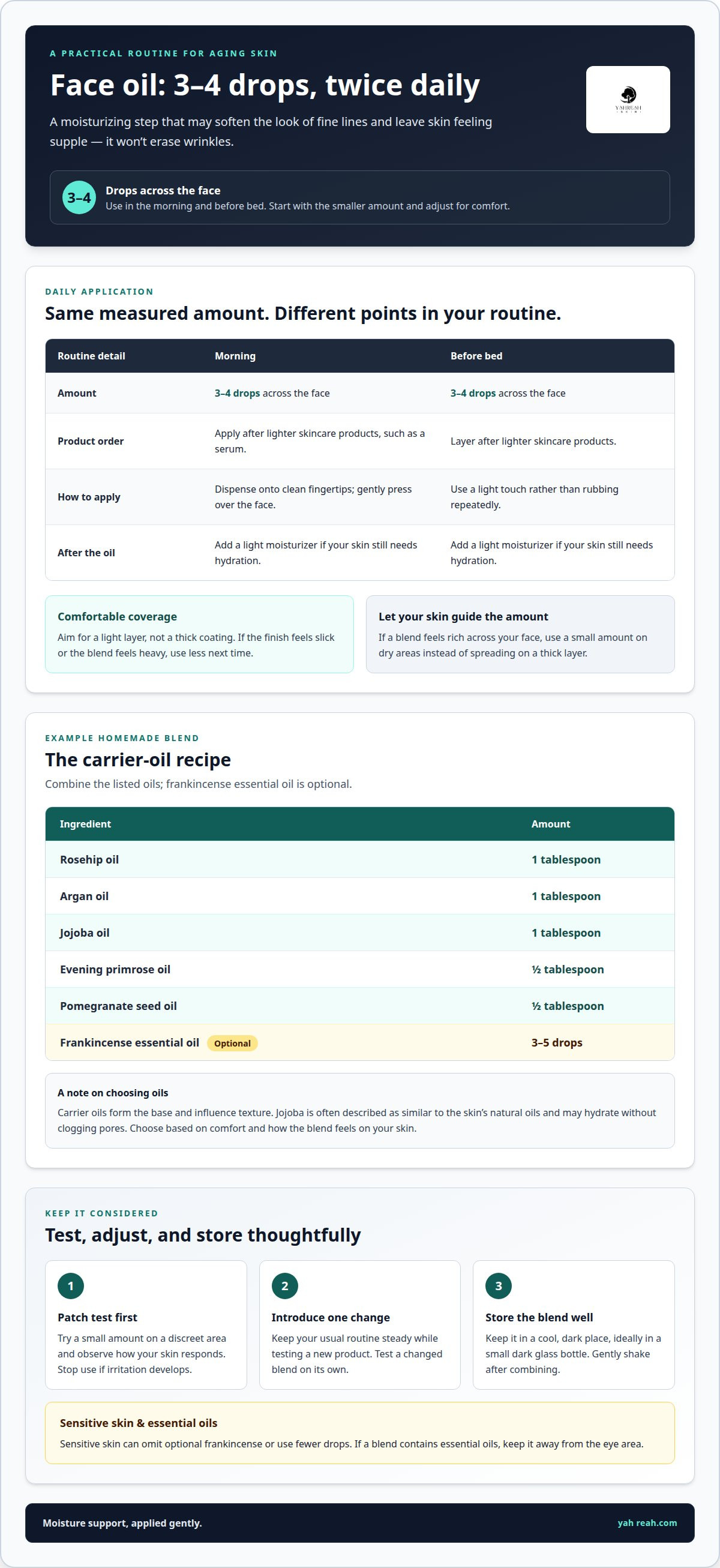
Face oil can soften the look of fine lines without promising to erase them. An antioxidant rich facial oil blend may help aging skin feel more comfortable by supporting a moisturized, supple-looking complexion. A simple starting amount is 3-4 drops on the face, applied twice a day, in the morning and before bed.
If your skin feels dry or looks less smooth, you may wonder whether an oil will feel nourishing or too heavy. Start gently: apply a small amount and notice how your complexion responds. This guide explains how face oils can support the look and feel of aging skin, how to apply a blend, and where it fits in your routine. You’ll also find practical guidance on sensitive skin and essential oils, so this step feels considered rather than complicated.
Face oils may soften the look of fine lines by helping skin retain moisture. They can support your routine, but they won’t erase wrinkles.
Face oils act as emollients, helping reduce moisture loss and leave skin feeling supple. Some also have occlusive properties, forming a surface layer that helps hold moisture. For fine lines, choose a formula that suits your skin’s needs and feels comfortable. An antioxidant rich facial oil blend can complement your skincare routine, while moisturizer remains an important step.
Carrier oils form the base of a blend and influence its texture. Jojoba is often described as similar to the skin’s natural oils and may hydrate without clogging pores. Rosehip, argan, evening primrose, and pomegranate seed oils are also used in botanical blends. Choose based on comfort and how the oil feels on your skin, rather than assuming every plant oil works the same way.
Facial oil and an antioxidant serum, such as vitamin C, are different skincare formats. Apply a serum before face oil; the oil adds emollient moisture, and a light moisturizer can follow if your skin needs extra hydration. For a simple routine, layer products from lighter to richer textures.
For a homemade blend, combine 1 tablespoon each of rosehip, argan, and jojoba oils with ½ tablespoon each of evening primrose and pomegranate seed oils. Frankincense essential oil is optional at 3-5 drops. Sensitive skin can omit it or use fewer drops; avoid the eye area when a blend contains essential oils.
A homemade oil’s usable life depends on the freshness of its ingredients and how it is stored. Keep the blend in a cool, dark place, ideally in a small dark glass bottle to limit sunlight exposure. Gently shake the bottle after combining the oils.
Use 3-4 drops of facial oil blend across the face, applying it twice a day: in the morning and before bed. Begin with the smaller amount, then adjust how you distribute it according to how your skin feels.
For smooth application, dispense the oil onto clean fingertips and gently press it over your face. Use a light touch instead of rubbing repeatedly, especially where your complexion feels delicate. If the blend feels heavy or leaves a slick finish, use less next time. Aim for comfortable coverage, not a thick coating.
Patch test a new blend before applying it to your face. Place a small amount on a discreet area of skin and observe how it responds. Stop using it if irritation develops.
Introduce each new product separately. Keep your usual skincare routine steady while testing the oil, for example, so you can identify which ingredients may be affecting your skin. If you change the blend, test that version on its own rather than introducing it alongside another new product.
For sensitive skin, leave out optional frankincense essential oil or use fewer drops. If a blend contains essential oils, keep it away from the eye area. These steps keep application focused on facial skin, while a lightweight texture may make the routine feel more comfortable.
Your skin may feel different from morning to evening, so notice whether the oil absorbs comfortably or feels too rich. Use a modest amount and adjust your routine based on how it feels, rather than applying extra product to pursue a smoother appearance.
A facial oil can leave the complexion feeling more supple by acting as an emollient. Face oils help reduce moisture loss and may also form an occlusive layer on the skin. Texture matters: a nourishing oil may leave mature skin feeling softer, while a heavier formula may feel uncomfortable. Judge a blend by how it feels on your skin, not by the number of botanical ingredients on its label.
For a simple routine, apply facial oil after lighter products, then add a light moisturizer if your skin still feels dry. This pairs the oil’s emollient effect with moisturizer instead of expecting oil alone to provide every kind of hydration. For example, if your cheeks feel tight after cleansing, follow your usual skincare steps with the oil, then finish with moisturizer as needed.
Texture can guide how much oil to use and where to apply it. If a blend feels rich across your whole face, press a small amount onto dry areas instead of spreading on a thick layer. If the finish feels slick or uncomfortable, use less next time. A lightweight formula may feel more comfortable for skin prone to irritation, while a richer texture may suit particularly dry areas.
Consider the full ingredient list when choosing a product for your routine. Jojoba is often described as similar to the skin’s natural oils and may hydrate without clogging pores. Rosehip, argan, evening primrose, and pomegranate seed oils offer other botanical ingredients, but their names alone don’t determine how your complexion will respond. Introduce one formulated product at a time and notice how it feels. If irritation develops, stop using it instead of adding more layers. This measured approach helps you assess comfort without changing several steps at once.
Rosehip oil is one of the carrier oils in the blend described here. Its inclusion gives you a concrete starting point when considering botanical ingredients for mature skin. The word “antioxidant” can sound like a broad promise, so focus on the named oils and the blend’s role in your routine. An oil can support a soft, radiant-looking finish, but it isn’t a guaranteed way to change wrinkles or skin tone.
When considering a rosehip blend, look at the full combination rather than judging one ingredient alone. This recipe pairs rosehip with argan and jojoba, as well as evening primrose and pomegranate seed oils. Each oil contributes to the blend’s overall texture and feel. If your skin is prone to irritation, you can leave out the optional frankincense essential oil for a simpler combination.
In the morning, use facial oil as one step in your routine and consider how it feels beneath makeup. A rich layer may wear differently under foundation than a light application. Notice whether makeup glides smoothly or shifts, then adjust the amount or placement next time. This simple observation can help you decide whether the blend suits your morning routine.
For mature skin, assess comfort and appearance separately. An oil may leave your complexion feeling nourished and looking more radiant, but its texture may not suit every area equally. Apply it where dryness is most noticeable, then notice how your skin feels throughout your routine. Keep the ingredient list consistent while assessing the blend instead of adding several new products at once.
Choose a rosehip oil blend for its ingredients and sensory fit, not an antioxidant label alone. A thoughtful addition should complement the moisturizer and other skincare steps you already use. If you want to explore botanical options, browse natural skincare choices suited to a simple, ingredient-conscious routine.
Yahreah Skin offers natural skincare products for readers exploring botanical ingredients and a considered facial oil routine. If you’re choosing products to complement your skincare steps, its focus on clean ingredients and cruelty-free formulations may help guide your selection. Keep your priorities clear: look for a texture that feels comfortable and ingredients that suit your routine, rather than expecting an oil to erase fine lines.
Yahreah Skin also offers women’s health supplements, men’s health supplements, and premium supplements as part of a broader approach to wellness. For this skincare question, its natural skincare products are the most relevant place to begin. Choose a routine that feels manageable and aligned with your preferences.
Explore Yahreah Skin’s natural skincare products and choose an option that fits your routine.
Let your routine reflect what your complexion needs today, rather than what a product promises to change. An antioxidant rich facial oil blend can be a considered addition, chosen for its ingredients and comfortable feel. Give a new skincare step time to show how it fits, and keep your approach gentle and consistent.
Yahreah Skin offers natural skincare products alongside Women’s Health Supplements, Men’s Health Supplements, and Premium Supplements. These offerings support a broader interest in everyday wellness, while your facial oil choice can stay focused on your skincare preferences. Choose a next step that feels thoughtful and manageable for you.
If you’d like to explore options or ask about Yahreah Skin’s offerings, contact Yahreah Skin. Take your time, choose with care, and let your routine become a small, steady act of self-care.
Face oil may suit aging skin when dryness makes your complexion feel tight or fine lines look more noticeable. Its emollient effect can leave skin feeling softer and more comfortable, but it won’t erase wrinkles. For example, if your skin feels dry after cleansing, a small amount may add a supple finish. Choose based on comfort and texture, not age alone.
Face oils may feel too rich for some people, and responses vary by formula and individual. If congestion concerns you, introduce one oil at a time and apply a modest amount to a small area first. Notice how your skin responds before making it a regular step. A lighter-feeling option, such as jojoba, may feel more comfortable for skin prone to irritation.
Common carrier oils include rosehip, argan, jojoba, evening primrose, and pomegranate seed oil. Some blends also contain frankincense essential oil, which is distinct from carrier oils and can be omitted if your skin is sensitive. Read the full ingredient list instead of relying on the word “antioxidant” alone. The combination and overall feel matter when choosing a blend.
No single oil can be ranked as the strongest based on its name or an “antioxidant” label alone. The evidence depends on the specific ingredient, formulation, and outcome being assessed. Rosehip and pomegranate seed oils are botanical ingredients used in facial blends, but that alone doesn’t establish their comparative effectiveness. Consider ingredient transparency and how the formula fits your skincare routine.
Facial oils can help reduce moisture loss, which may improve the feel of dry skin and soften the appearance of fine lines. That moisturizing role doesn’t establish that an oil will change uneven skin tone. Treat concerns about skin tone as a separate skincare goal, and don’t assume a botanical blend replaces products designed for that purpose.
Facial oils may irritate skin or cause an unwanted reaction, and some formulas may feel pore-clogging. Essential oils, such as optional frankincense, may be a concern for sensitive skin; leave them out or use fewer drops. Test a new formula on a discreet patch of skin before facial use, and keep blends containing essential oils away from the eyes.


