

 USD
 EUR
 AUD
 GBP
 JPY
 INR
 MXN
 CAD
 JMD
Total: $0.00
Taxes and shipping calculated at checkout


Adaptogens are herbs and mushrooms that may help the body maintain balance during stress. They’re often discussed in relation to cortisol and the HPA axis, which coordinates part of the body’s stress response. The Cortisol Reset Guide: Using Adaptogens to Bridge the Burnout Gap looks at how these ingredients may fit into a broader approach to stress, not as a quick fix.
It’s understandable to look for support when stress starts affecting how you feel day to day. This guide explains what adaptogens are and how they may relate to cortisol, the HPA axis, and the body’s response to stress. It also considers why adaptogens are best viewed alongside supportive lifestyle habits, and why informed use matters.
Adaptogens are herbs and mushrooms that may support the body’s ability to maintain balance during stress. Their possible role is best understood alongside the wider stress response, not as a shortcut around its causes.
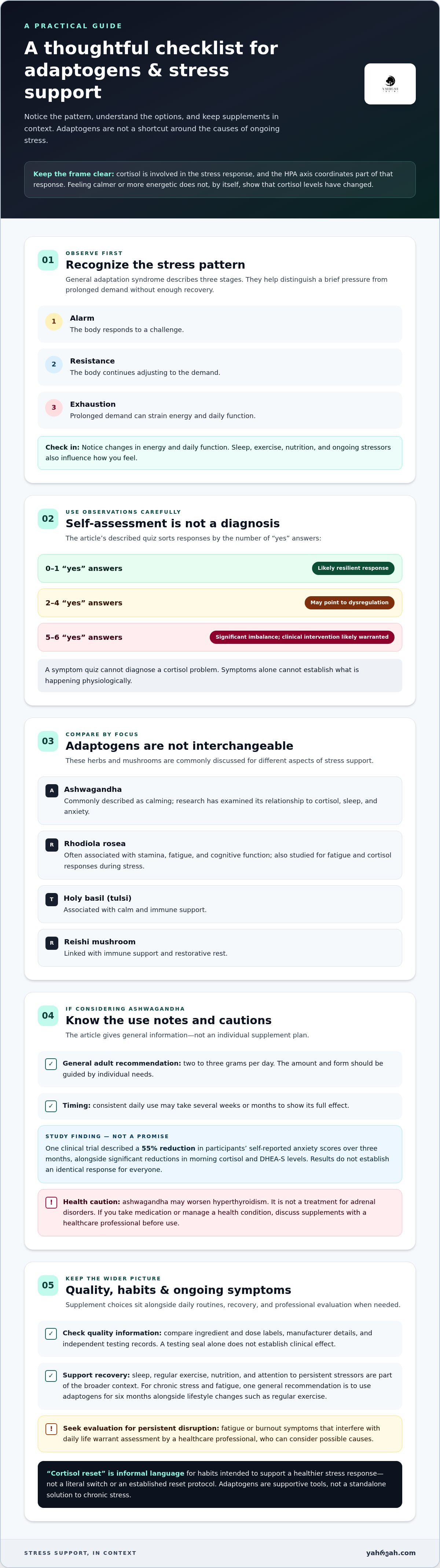
General adaptation syndrome describes stress in three stages: alarm, resistance, and exhaustion. This sequence helps explain why a brief burst of pressure can feel different from chronic stress without enough recovery. In the alarm stage, the body responds to a challenge. Resistance describes continued adjustment, while exhaustion reflects strain after prolonged demand. Noticing this pattern can help you recognize changes in energy and daily function.
Adaptogens are discussed as possible support for resilience to different stressors, which may affect perceived stress, fatigue, and well-being. Effects vary by herb, person, and context, so feeling calmer or having steadier energy doesn’t necessarily mean cortisol levels have changed. Sleep, exercise, nutrition, and ongoing stressors also influence how you feel.
A simple self-assessment can help organize observations, but it can’t diagnose a cortisol problem. In the described quiz, 0-1 “yes” answers suggest a likely resilient response, 2-4 may point to dysregulation, and 5-6 signal significant imbalance where clinical intervention is likely warranted.
For chronic stress and fatigue, adaptogens are considered supportive tools, not substitutes for addressing persistent demands or recovery habits. One general recommendation is to use them for six months for chronic stress and fatigue, alongside lifestyle changes such as regular exercise. The aim is to support the body’s response, not to promise restored energy or reduced inflammation.
In the United States, assess supplement quality by comparing ingredient and dose labels, manufacturer details, and independent testing records. For current FDA requirements, consult the agency’s dietary supplement guidance. A testing seal alone doesn’t establish a supplement’s clinical effect.
Persistent fatigue or burnout symptoms that disrupt daily life warrant evaluation by a healthcare professional. A clinician can assess possible causes rather than relying on a symptom quiz to explain them.
Adaptogens are herbs and mushrooms associated with helping the body adapt to stress. The Cortisol Reset Guide: Using Adaptogens to Bridge the Burnout Gap considers them as part of stress support, not as interchangeable remedies.
Ashwagandha is commonly described as calming, and research has examined its relationship to cortisol, sleep, and anxiety. Rhodiola rosea is often associated with stamina, fatigue, and cognitive function, making it a different consideration for people focused on energy under pressure.
Holy basil, also called tulsi, is associated with calm and immune support. Reishi mushroom is linked with immune support and restorative rest. These examples show why “adaptogen” doesn’t mean every herb has the same function or effect on stress and hormones.
Using ashwagandha involves taking the herb consistently over time, with the amount and form guided by individual needs. A general recommendation for adults is two to three grams per day. Its full effect may take several weeks or months of daily use.
One clinical trial described a 55% reduction in participants’ self-reported anxiety scores over three months. It also found significant reductions in morning cortisol and DHEA-S levels. These study results don’t establish an identical response for everyone. Read The Cortisol Reset Guide: Using Adaptogens to Bridge the Burnout Gap as an overview of possible roles, not an individual supplement plan.
Withania, the botanical name for ashwagandha, may worsen hyperthyroidism, so thyroid health matters when considering it. Ashwagandha isn’t a treatment for adrenal disorders, and hormone changes don’t prove that it corrects adrenal gland function. If you take medication or manage a health condition, discuss supplements with a healthcare professional before use.
Cortisol regulation involves interactions between stress signals, daily rhythms, and recovery. Adaptogens are one area of interest, but they aren’t a standalone way to change the body’s stress response. The Cortisol Reset Guide: Using Adaptogens to Bridge the Burnout Gap frames the topic as a broader exploration of stress support, not a promise of a rapid reset.
Cortisol is a hormone involved in the body’s response to stress and supports essential functions. Chronic stress can influence cortisol levels and patterns, but symptoms alone can’t establish what is happening physiologically.
That distinction matters because fatigue, sleep changes, and mental strain can have different causes. Adaptogens are described as supporting balance in both directions, calming an overactive system or energizing a depleted one. Their possible effects need context: sleep, exercise, lifestyle, and ongoing pressures all shape how you feel. A supplement’s intended role is not the same as a diagnosis or a cortisol measurement.
“Cortisol reset” is an informal phrase for habits intended to support a healthier stress response, not a literal switch that resets hormone levels. Evidence relates to particular herbs and practices, not to one established reset protocol. The Cortisol Reset Guide: Using Adaptogens to Bridge the Burnout Gap is a useful way to consider the topic, as long as “reset” isn’t mistaken for a clinical procedure.
Research on ashwagandha reports reduced cortisol in chronically stressed adults, while rhodiola has been studied for fatigue and cortisol responses during stress. These findings concern specific herbs and study outcomes. They don’t establish that every adaptogen, product, or routine will have the same effect.
For a thoughtful approach, consider the ingredient, preparation, and your broader routine together. Regular movement, restorative sleep, and attention to persistent stressors can support resilience alongside supplement choices.
The HPA axis is a communication network linking the hypothalamus, pituitary gland, and adrenal glands. It helps coordinate the body’s response to stress, including signals that influence cortisol. This pathway puts adaptogens in context: their proposed role is to support stress-response regulation, not switch off the body’s alarm system.
Adaptogens are described as modulating the HPA axis and supporting responses to physical, chemical, and biological stressors. Modulation means influencing how the system responds, rather than simply suppressing a stress hormone. Effects can depend on the herb, the person, and the stressor. Feeling calm, by itself, doesn’t show how cortisol or HPA signaling has changed.
The HPA axis also operates within daily rhythms. The cortisol awakening response describes a 50 to 75 percent rise in circulating cortisol about 30 to 45 minutes after waking. This morning increase is part of the body’s normal pattern, not automatically evidence of harmful stress. Sleep timing, light exposure, and ongoing pressures shape the wider context for interpreting energy, clarity, and stress-related symptoms.
Herbal adaptogens aren’t interchangeable, and findings about one preparation don’t establish the same effect for every supplement. A more useful question is whether a specific herb supports a particular response, such as stress-related fatigue, rather than whether it can “reset” the entire axis. The nervous system, HPA signaling, and daily habits interact, so one supplement can’t explain every change in mood or function.
For a grounded routine, pair any herbal approach with restorative habits and observe changes in sleep, energy, and stress response. Explore a more mindful self-care ritual as part of that broader practice.
Yahreah Skin offers Women’s Health Supplements for readers exploring supplements as part of a broader wellness routine. The brand also offers Men’s Health Supplements, Premium Supplements, and Natural Skincare Products, featuring clean ingredients and cruelty-free formulations.
Consider these products as a complement to thoughtful daily self-care, not a replacement for investigating persistent fatigue or other health concerns. Choose supplements carefully, especially if you take medication or have questions about whether an ingredient is suitable for you.
Explore Yahreah Skin’s wellness and skincare products at yahreah.com.
Let The Cortisol Reset Guide: Using Adaptogens to Bridge the Burnout Gap be a starting point for a more considered approach to stress, not a reason to overhaul your life overnight. Choose one supportive habit you can sustain, notice how your energy and daily routines feel, and give yourself room to adjust. Small, steady choices can make well-being feel more intentional.
Supplements are one part of personal care. If you’re considering them, take time to understand their ingredients and how they fit your circumstances. Persistent fatigue or distress deserves attention beyond a supplement routine, so seek appropriate medical guidance when symptoms continue to interfere with daily life.
For a considered next step in your wellness journey, contact Yahreah Skin today. Begin with care, stay curious, and build a routine that feels right for you.
Adaptogens are herbs and mushrooms associated with helping the body respond to stressors and maintain balance. Their proposed role involves influencing stress-response pathways, including communication between the brain and adrenal glands. They aren’t interchangeable: ashwagandha and rhodiola are herbs, while reishi is a mushroom. The specific plant, preparation, and person shape what researchers examine.
Adaptogens are studied for potential support with stress, fatigue, stamina, and aspects of well-being. Rhodiola has been examined for fatigue, while ashwagandha research has included anxiety and cortisol measures. These are distinct outcomes, not one general measure of “stress.” Adaptogens come in forms such as capsules, teas, or tinctures, so the ingredient and preparation matter when comparing products.
The cortisol awakening response, or CAR, is a normal morning rise in circulating cortisol after waking. It’s described as a 50 to 75 percent increase about 30 to 45 minutes after waking. This daily change is different from judging stress by one feeling or symptom. Wake time and the timing of a sample matter when interpreting cortisol measurements.
Herbal adaptogens are plant-derived ingredients traditionally used to support adaptation to stress. Examples include ashwagandha, rhodiola rosea, holy basil, eleuthero, and ginseng. Reishi is an adaptogenic mushroom, not an herb. This distinction helps you read ingredient lists accurately: a formula may combine plant extracts, mushrooms, or both, and each ingredient has its own research history.
Ashwagandha has been studied for anxiety and cortisol measures, while rhodiola has been examined in people experiencing burnout-related fatigue and stress responses. Eleuthero has been studied for endurance during supplementation. These studies look at different outcomes, so their findings aren’t directly comparable. For example, stamina research doesn’t establish an effect on anxiety or cortisol.
Some trials report changes in cortisol measures, but findings depend on the herb and study outcome. Ashwagandha studies described reductions in morning cortisol, including reductions of up to 30 percent in chronically stressed adults. A rhodiola clinical trial reported improved fatigue and cortisol responses during stress. Schisandra research also examined cortisol levels under increased stress, with results tied to that study’s conditions.


